 osr
osrGuides · Hex stocking
Stock the hex like you stock a room
The Basic/Expert dungeon stocking roll is short on purpose. A hexcrawl uses the same idea at a bigger scale: what used to take minutes now takes days, and what used to be a ten-foot square is now a few miles across.
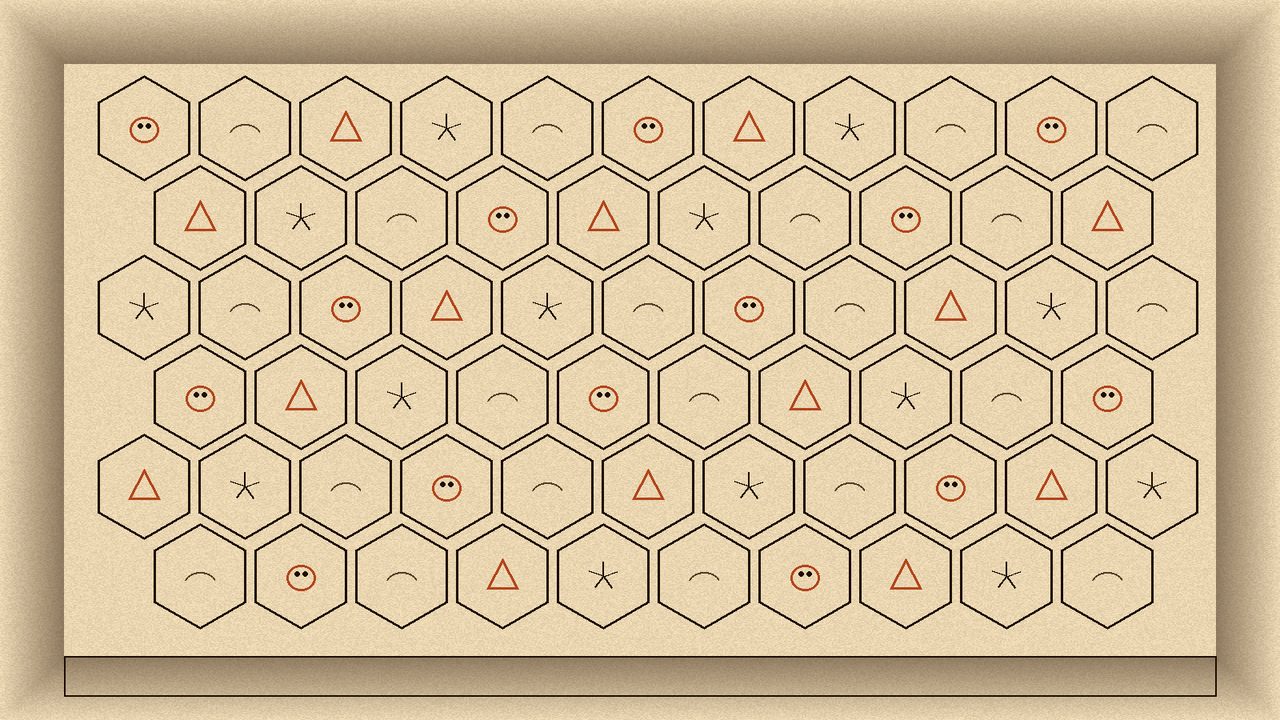
For a dungeon room, Basic/Expert has you roll 1d6: 1–2 Monster, 3–4 Empty, 5 Trap, 6 Special. Then you check for treasure: 3-in-6 after a Monster, 2-in-6 after Empty, 1-in-6 after Trap or Special. The whole thing fits in one breath, which is why people still use it.
A wilderness map needs the same kind of mix: places to find, problems to solve, and trouble that can find the party. It should not feel like a nature walk with nothing at stake. Stock each hex with those same two rolls. If travel nights tend to drag for your group, put Empty on more faces of the die. On a d8, Empty comes up about half the time. On a d12, it comes up more often, which leaves more quiet ground between the hexes that matter. “Empty” does not mean blank paper. It means nothing that forces a fight, a trap check, or another subsystem the moment they step in.
Monster
A Monster hex has a lair. That is what separates it from a wandering encounter you roll while the party is just moving through. If your book lists a chance the creature is in its lair, use that chance when they enter the hex. If it does not, pick a chance that fits how the creature lives.
Then roll 1d6. On a 1–2 they find the lair. On a 3–4 they meet a patrol, or find tracks and signs if the patrol is based here. Adjust those odds for stealth, mounts, weather, and how alert the locals are, whatever your table already tracks.
The party can cross a hex, mark it empty, and walk into a manticore nest on the way back. That is fine. It keeps them from treating the map like settled fact.
Empty
Hills, sheep, a ford, a talkative farmer, herbs worth gathering. These details can matter later (sheep make decent dragon bait), but they are not a scripted set piece. If every hex on the map is “an adventure,” none of them feel special.
Trap
This is rarely a pit with spikes. Think hazards the land itself throws at travelers: a mountain pass that ruins horses, rapids that wreck boats, geysers that fire on a schedule nobody told you, sinkholes that open under the mule.
Skip hazards that only work on the first visit. Give the danger an X-in-6 chance when they enter, and roll again if they spend a move searching. Guides, ropes, and solid information can bring that chance down to zero. When it does trigger, handle it like any other trap: the players solve a problem and make saves. Do not turn it into a cutscene.
Missing the hazard the first time through is part of how the procedure works, not a failure.
Special
This is the wildcard result. Many rules say Special should not include treasure; ignore that if the site clearly wants a relic. Some Specials are obvious: the party enters the hex and finds the thing. Hidden wonders still get an X-in-6 chance to notice.
Danger is fine here. Defaulting to combat is not. Loch Ness is a Monster. The Lady of the Lake is a Special.
For Monster, Empty, Trap, and Special alike: roll the discovery chance when they enter, roll again each time they spend a move searching, and add +1-in-6 for each serious survey turn as they rule out ground.
Settlements (extra roll)
Do not add “Town” as a sixth stocking type. That only tells you what sits on the map, not how the players interact with it. Check for a settlement the way you check for treasure:
- Empty: 1–3
- Monster: 1–2
- Trap: 1
- Special: when it amuses you
Read the combination. Monster plus settlement might be a town of monsters, a town ruled by one, or a town that only thinks it is human. Empty plus settlement is ordinary people with ordinary knives. Trap plus settlement might be streets built like a death maze, a village past a climb that kills climbers, or friendly hosts who still fight fair when pressed. Special plus settlement is your chance to invent something the table will remember.
When you can, use the same die face for size: 1 for a hamlet, 2 for a town, 3 for a city. Empty hexes can support bigger places; Trap hexes usually stay small. Ignore the odds when you already know you want a city of ogre magistrates.
Treasure
Hoards usually sit with monsters until they do not: contested caches, a monster that is itself the prize, or an ambush waiting after someone digs the chest up. Empty plus treasure might be coffers in a settled hex, or buried map bait, ore veins, and tombs when there is no settlement. Remember that in Basic/Expert, a chunk of “scrolls” are treasure maps, so some loot should be nearly impossible to find without one.
Trap plus treasure is fine as a default: guarded, or lying with the last fool who tried. Cursed glory counts. So does a lava field that has nothing to do with the giant gold pile next to it. Special plus treasure is your call.
Small chances to pick up coin show up everywhere, and you do not need to sweat them. Classic wilderness play really bites when the party needs tens of thousands of experience to level. Selling sheep will not get them there.
How busy the map feels, and rolling two results
Keep Empty on the higher faces of the die so you can make the map busier or quieter just by changing which die you roll. Swap which results sit on which faces if you want a stretch of country that is mostly monsters.
True double features (Trap and Special in one hex, or Monster and Trap together) are rare. Wandering encounters already give you “roll twice” drama inside a Monster hex. Save real doubles for nights when you want the table to invent a story on the spot.
Stock each hex the way you would stock a room, keep the torch clock honest when they go underground again, and when Empty comes up, leave it empty on purpose.
Related desks in this neighborhood
Edition-specific desks when you want a different dialect: